
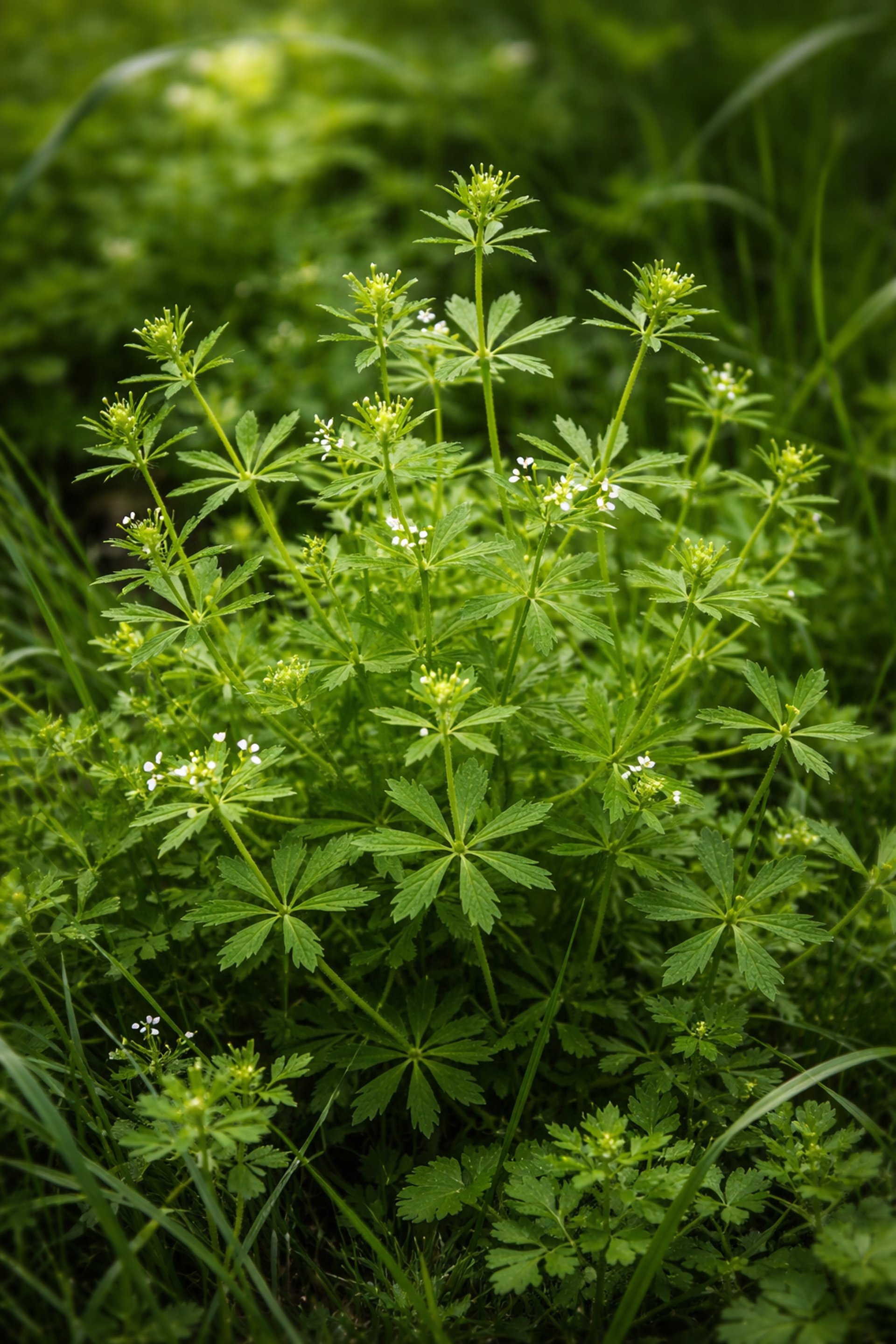
Cleavers
Galium Aparine
LEAVES & AERIAL HERBS
Best Extraction Practices
Cleavers extracts well through water-based infusions and fresh plant tinctures.
Fresh plant tinctures are often preferred because they help capture the plant’s delicate constituents. Gentle infusions are also commonly used when preparing spring tonics or cleansing teas.
Because the plant is tender and delicate, long simmering or harsh extraction methods are generally avoided.
Shelf Life in Storage
Dried cleavers should be stored in airtight containers away from heat, light, and moisture.
Approximate shelf life:
Dried aerial parts: about 1 year for best quality
Cleavers is often considered most effective when used fresh, as the dried herb may lose some of its vibrant qualities over time.
Safety Notes
Cleavers is generally considered a gentle herb when used in typical herbal preparations.
Important considerations include:
Proper plant identification is important when harvesting wild plants.
Individuals with specific medical conditions should consult a qualified practitioner before using new herbs regularly.
Cleavers is widely regarded as safe for traditional herbal use.
Cleavers (Galium Aparine)
Identity & Origin
Cleavers (Galium aparine) is an annual plant in the Rubiaceae family, which also includes coffee and bedstraw.
It is native to Europe and parts of Asia, but it has become widely naturalized throughout North America and other temperate regions.
Common names include:
Cleavers
Goosegrass
Stickyweed
Catchweed
Bedstraw
The medicinal portion used in herbal practice is typically the fresh aerial parts, including the stems, leaves, and young tips.
Uses in Apothecary Work
In herbal preparations, cleavers are commonly used to support:
Lymphatic circulation
Gentle fluid movement in the body
Seasonal cleansing tonics
Skin balance and clarity
Mild urinary support
Because of its cooling and cleansing qualities, cleavers are frequently included in formulas intended to support skin health and lymphatic flow.
Historical & Cultural Context
Cleavers have been used in traditional European herbal medicine for centuries, often appearing in spring tonics and cleansing preparations.
The plant was historically gathered in early spring when the young shoots were tender and vibrant. In folk traditions, cleavers were sometimes associated with seasonal renewal and cleansing after the long winter months.
The name “bedstraw” comes from the historical use of related Galium species as bedding material, where their fragrance and texture were thought to improve comfort and sleep.
Key Minerals & Constituents
Cleavers contains a variety of compounds that contribute to its gentle cleansing and lymphatic-supportive qualities.
Key constituents include:
Iridoid glycosides
Flavonoids
Coumarins
Tannins
Trace minerals
These compounds contribute to cleavers’ reputation as a cooling, fluid-moving, and mildly astringent herb.
Preparation & Best Practices
Cleavers are most often prepared using the fresh plant, as many herbalists find it retains more vitality and effectiveness when used fresh.
Common preparations include:
The tender spring growth is typically harvested before the plant becomes tough or fibrous.
Energetic & Ritual Associations
In traditional herbal energetics, cleavers is often described as cooling, moistening, and gently clearing.
Symbolically, the plant’s clinging nature has sometimes been associated with connection, circulation, and the clearing of stagnation, reflecting its traditional role in supporting lymphatic flow.
In the Archive With…
Often associated with other herbs traditionally used for lymphatic and skin support, including:
Marshmallow
Plantain
Chickweed
Violet
Nettle
These herbs frequently appear in preparations intended to support lymphatic movement, fluid balance, and gentle detoxification.
Appearance & Character
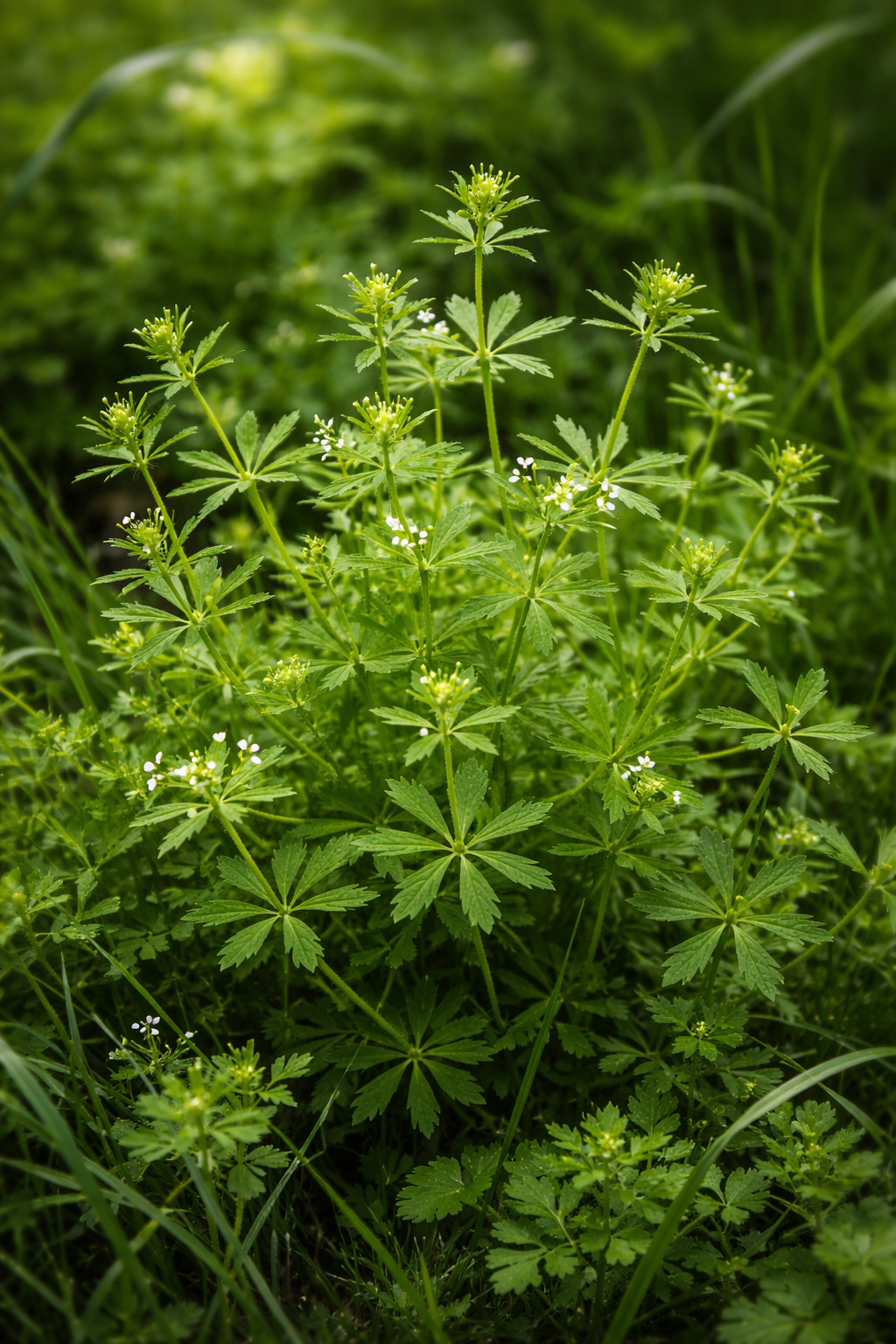
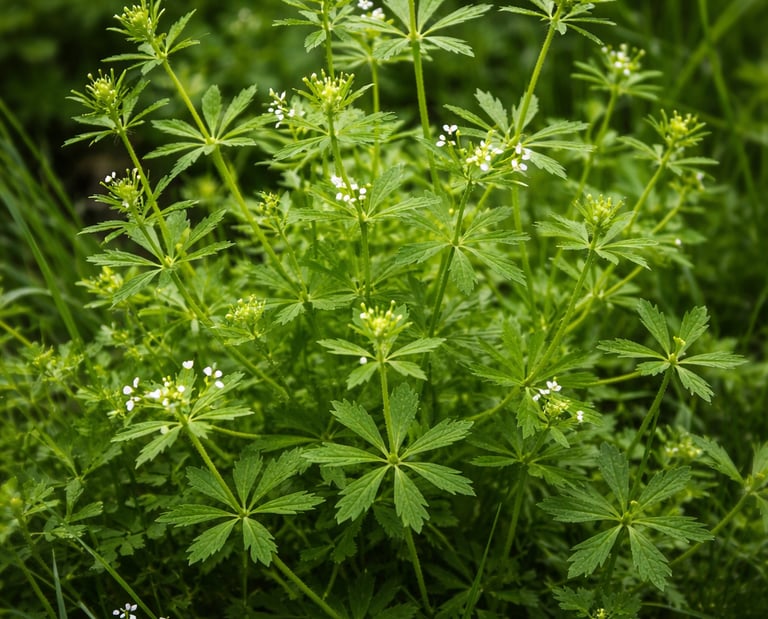
Cleavers is a slender, sprawling plant with thin square stems and narrow leaves arranged in circular whorls around the stem. The leaves and stems are covered in tiny hooked hairs, giving the plant its characteristic sticky or clinging quality.
When fresh, the plant is bright green and tender. The taste is mild, slightly green, and somewhat grassy.
The dried herb becomes fragile and loses much of its cling, but the fresh plant is most often preferred for many traditional preparations.
Wild Medicine Apothecary
Contact
info@wildmedicineguide.com
+1-470-304-8111
© 2024. All rights reserved.
Kennesaw, GA
Wild Medicine Apothecary provides compliance education, documentation systems, and botanical reference materials for independent cosmetic brands.


Wild Medicine Guide provides educational resources and professional tools. It does not provide legal advice or regulatory certification.
Wild Medicine Guide is part of the educational work of Wild Medicine Apothecary.